
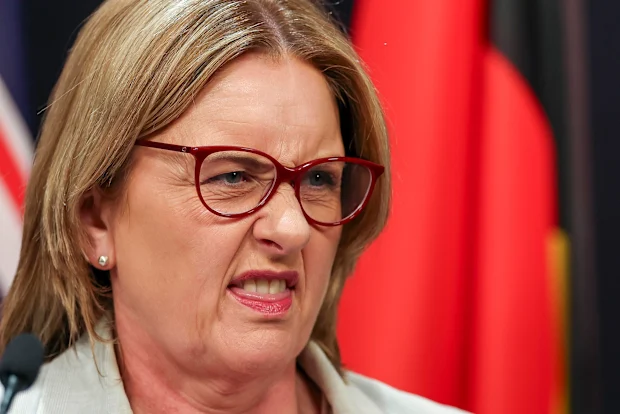
Victorian News has published an AAP story headed “New laws to force tech giants to unmask online trolls”. The story reports Premier Jacinta Allan’s announcement that Victoria will draft laws giving VCAT “demasking” powers over anonymous accounts accused of online vilification, while also lowering the legal threshold for families suing social media and AI platforms over psychiatric harm to children.
It is worth slowing down on what was actually announced, because the headline does a lot of work. Allan’s announcement was not a general law forcing platforms to identify anyone who criticises a journalist, mocks a public figure, or runs a website someone dislikes. The proposal described in the AAP copy is tied to Victoria’s anti-vilification regime. That means the relevant question is not “did someone post something nasty?” It is whether the conduct fits online vilification: hate directed at a person or group because of protected attributes such as race, religious belief, disability, gender identity, sex, sex characteristics or sexual orientation.
That matters because Geelan appears to have inserted his own screenshot into the article as the example of an “online troll”, credited in the story as a screenshot by Ashley Geelan/VicNews. If that screenshot is meant to hint at Geelan Lies, then the point is obvious: criticism of Ashley Stephen Geelan, his published claims, his conduct, and his public record is not magically “hate speech” just because Ashley Geelan does not like reading it.
There is a sharp legal difference between vilifying someone because they belong to a protected class and documenting a public figure’s own statements, contradictions, screenshots and court history. Geelan Lies is about Ashley Geelan’s conduct and claims. It is not a campaign against a race, religion, sex, disability, sexuality, gender identity, sex characteristic, or any other protected group. If Geelan wants to argue that a screenshot of criticism is “hate”, he still has to get from bruised ego to the actual legal test. That is a long walk.
The Victorian Government’s own anti-vilification material is careful on this point. It says the serious criminal offences target the most serious hate speech or conduct, “not merely offensive or unkind behaviour”. The civil protections also focus on hateful, contemptuous, reviling or severely ridiculing conduct because of a protected attribute, or conduct likely to incite that kind of hatred. Ordinary public criticism, even rude public criticism, is not automatically the same thing.
There is another practical problem hiding under the political announcement: even if VCAT gets demasking powers, platforms may not always know who a user really is. A platform might have an email address, a phone number, a login IP address, a device fingerprint, payment records, or nothing especially useful. Some users sign up with disposable email, prepaid phones, VPNs, shared networks, public Wi-Fi, Tor, or overseas services that keep thin logs or ignore Australian process until forced through slow international channels.
So “force the platform to identify the user” can really mean “force the platform to hand over whatever records it has”. That might identify a person cleanly. It might identify an IP address leased to a household, a mobile carrier behind CGNAT, a VPN exit node, or an abandoned email account. The order is powerful only if the platform collected, retained and can lawfully disclose enough information to connect an account to a real person.
That is where Geelan’s own history makes this particularly rich. This is the same Ashley Geelan whose conviction history includes stalking and harassment, with online publication, intervention-order issues and old local reporting already documented on this site. He knows perfectly well that online conduct can become a police and court matter. He also knows, or should know, that investigators do not need a shiny new headline law to look at electronic devices, accounts and message trails when conduct crosses into stalking, harassment or breaches of court orders.
Geelan has also used anonymous or semi-anonymous Twitter-style activity as part of the very online behaviour that later came back to bite him. In his own case, the end point was not a grand free-speech debate. It was law-enforcement attention, court consequences, and electronic devices being vulnerable to seizure and examination because the conduct had crossed the line into stalking and harassment. That history sits awkwardly beside an article presenting anonymous accounts as a public menace only when Geelan thinks the anonymous account is aimed at him. Anonymous accounts were not a philosophical problem for him when anonymity suited his own conduct. They become a moral emergency when he wants someone else unmasked.
The irony is not subtle. Geelan wants the emotional force of Allan’s announcement without the legal boundaries attached to it. He wants “unmask online hate” to sound like “unmask my critics”. But the announcement, as reported, is about vilification and child harm litigation. It is not a personal discovery tool for Ashley Geelan. It is not a new right for Victorian News to turn screenshots of criticism into state-backed identity hunts.
There may be serious cases where demasking powers are justified. Racist abuse, threats, targeted vilification and campaigns against protected groups are not harmless internet noise. But Geelan trying to wrap his own screenshot into that debate is exactly the sort of self-serving move readers should recognise by now: take a real public-policy issue, insert himself into it, and hope the seriousness of the topic rubs off on his personal grievance.
Sources and related reading
- Victorian News/AAP: New laws to force tech giants to unmask online trolls
- AAP: Demasking powers to identify social media haters
- Victorian Government: New protections against vilification
- Geelan Lies: Geelan’s criminal record
- Geelan Lies: Geelan runs afoul of the law again